Why are as-built documentation (DSPS) and a building passport key when selling or legalising a property?
When you need them, what they must contain and who may prepare them under the 2026 rules.
Planning to sell your house, applying for a mortgage, or discovered that your property does not match the official records at the building office? In 2026 it is more important than ever to have your paperwork in perfect order. The key document that saves you tens of thousands of crowns and months of waiting is the DSPS (as-built documentation) or its legislative twin — the building passport. When do you need them and what must they contain?
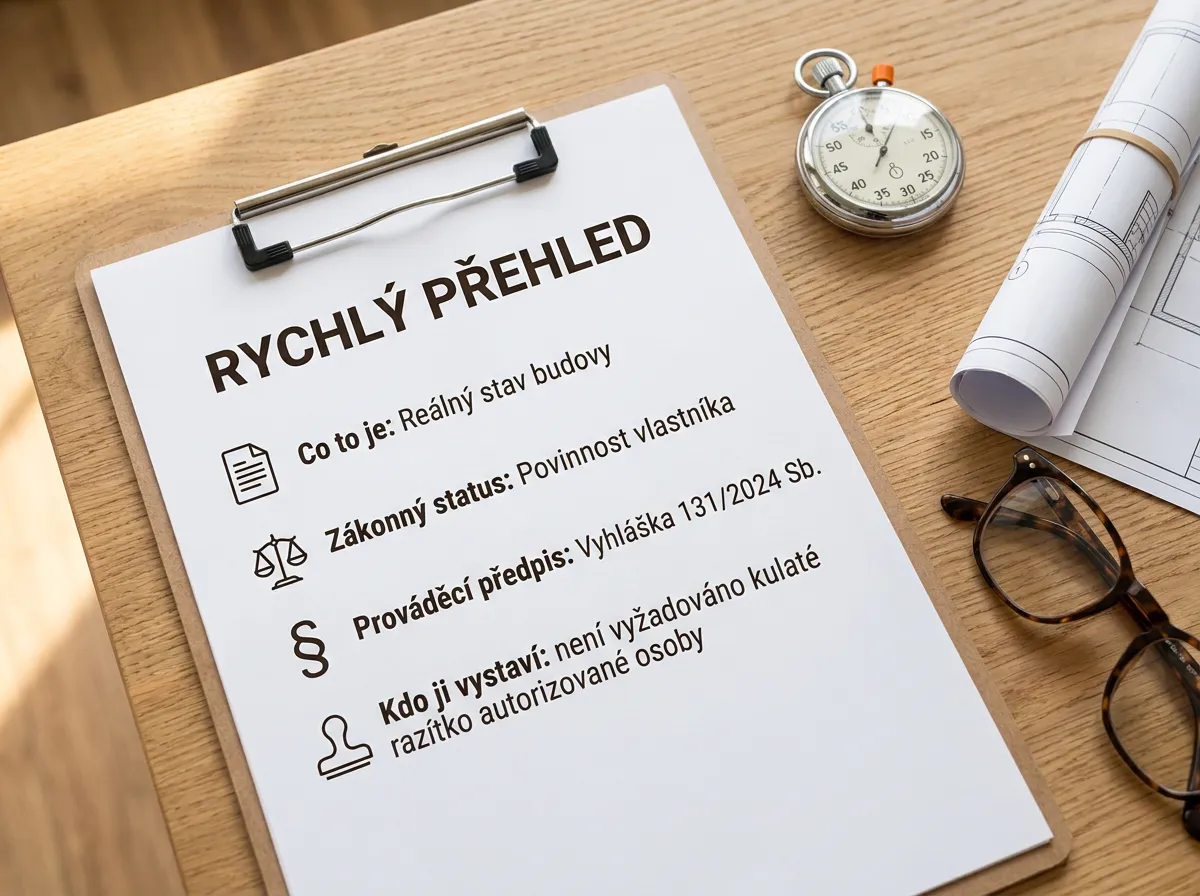
⏱️ Quick overview: as-built documentation in 2026
- What it is: Documentation of the building's real state — not the original (often outdated) design.
- Legal status: Keeping documentation that matches reality is every property owner's legal obligation.
- Implementing regulation: Prepared under the new Decree No. 131/2024 Coll. on building documentation.
- Who may issue it: For a family-house passport, no authorised person's stamp is legally required.
What is DSPS and how does it differ from a building passport?
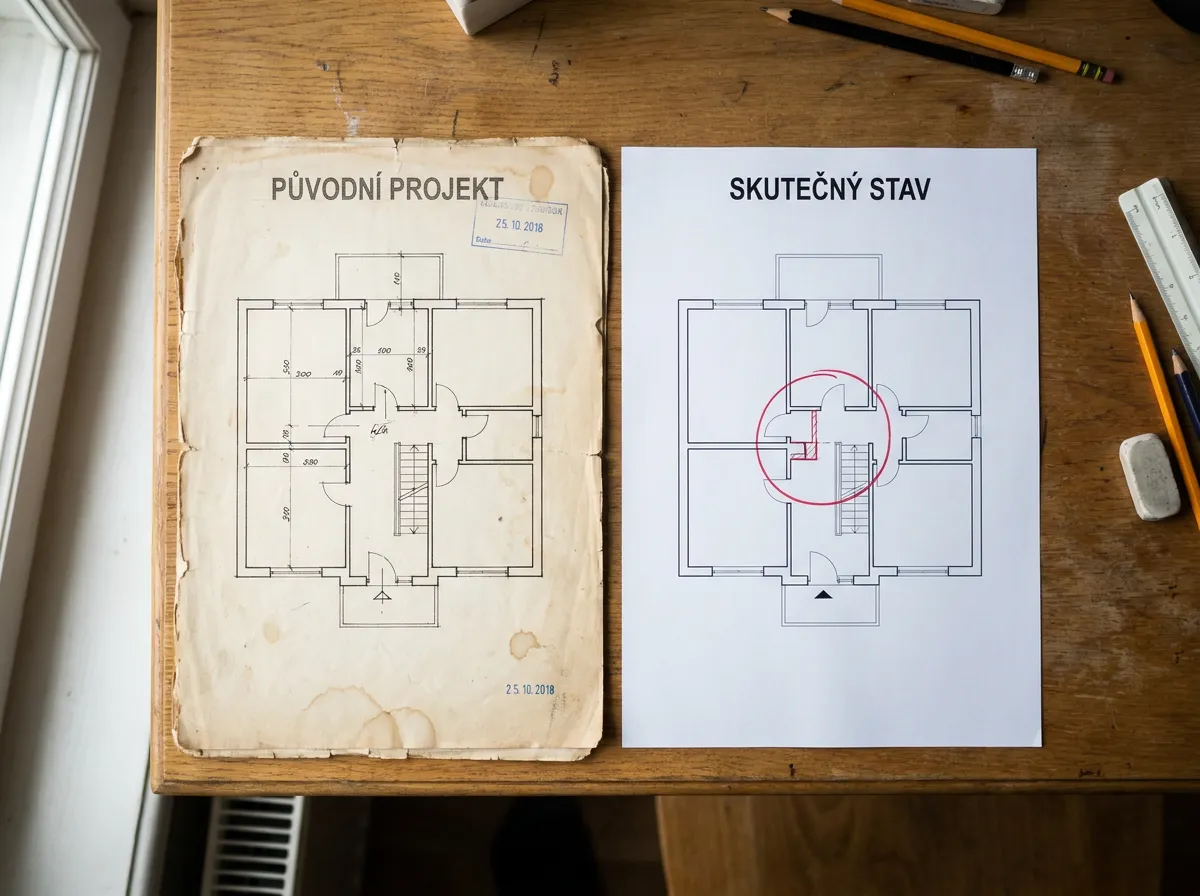
Almost every construction deviates from the permit design — partitions move, layouts change, window positions shift.
- DSPS (as-built documentation): Prepared right after completing a new build or major renovation. It captures the final, real state of the building before final approval.
- Building passport (simplified documentation): Used for older buildings whose original documentation was lost over the years, or for buildings that need retroactive legalisation. Under the new Building Act and Decree No. 131/2024 Coll. the passport has a clearly defined structure and is a fully valid basis for the authorities.
The owner's legal obligation: is your documentation in order?
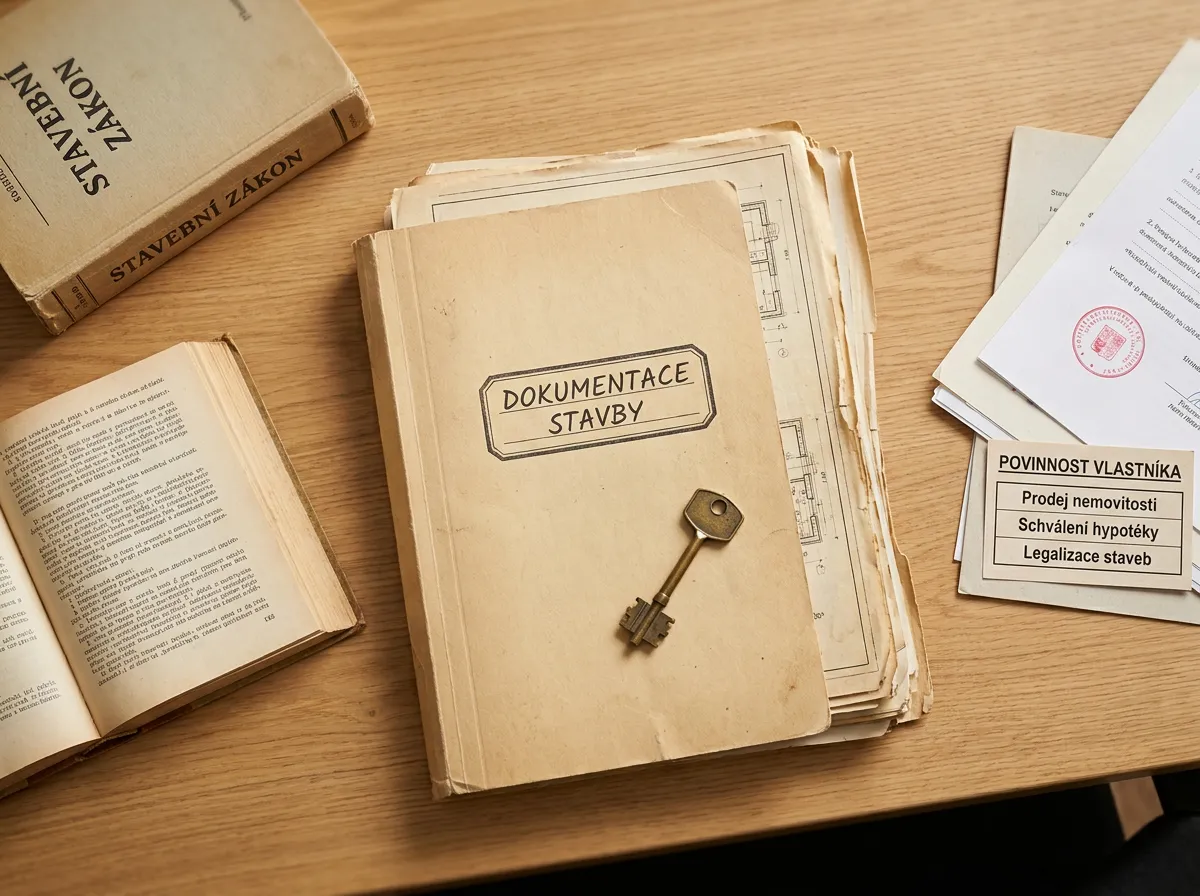
Many owners do not realise that keeping current building documentation is a legal obligation. The Building Act states clearly that the owner must keep as-built documentation for the building's entire existence. After any structural changes or renovations you must have the documentation updated and submitted to the building office.
| Reason / intent | Why current documentation (DSPS) is essential |
|---|---|
| Legal obligation & maintenance | As the owner you must have documentation available and updated to the actual state at all times. |
| Selling the property | When selling, you are obliged to hand complete, current documentation to the buyer. |
| Mortgage approval | Bank appraisers compare drawings with reality. A mismatch can block the buyer's loan. |
| Legalising structures | If an unregistered building or extension stands on the plot, the office cannot legalise it without a passport. |
| Insurance claims | The insurer requires accurate drawings to correctly quantify and pay out a claim. |
| Planned renovation | No architect or structural engineer can safely design changes without an accurate survey of the current state. |
What must the documentation (DSPS / passport) contain?
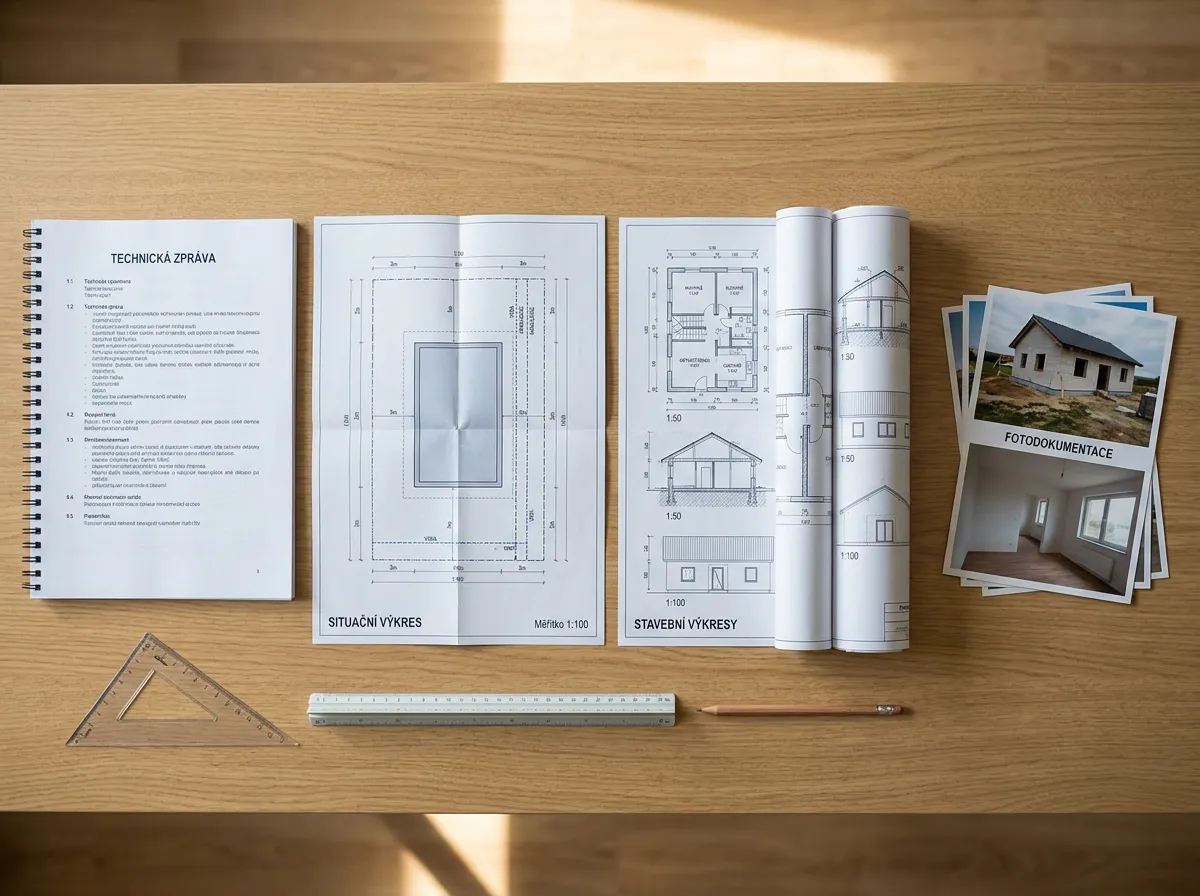
- Technical report: Detailed description of the building, structures, materials and overall technical condition.
- Site plan: Exact position on the plot, setbacks from boundaries and utility connections (water, sewer, electricity).
- Building drawings (1:50 / 1:100): Floor plans of all storeys, characteristic sections and elevations of all facades.
- Photo documentation: Exterior and interior photos confirming the drawings.
Builders often fear that every drawing for the office needs an expensive authorisation stamp. Not for a passport. The new Building Act brought relief: for a family house or cottage passport, no ČKAIT / ČKA authorised person is required — anyone with professional construction education may prepare it. Still, it pays to leave the survey to professionals: an amateur plan with wrong wall thicknesses, room heights or references to the cadastral map will be returned for rework by the office or the bank appraiser, costing you precious time.
Get your paperwork in order with RUMASTAV
Whether you are selling a family house or need to settle matters with the authorities and legalise a structure, RUMASTAV takes care of everything. We visit and precisely survey the property, prepare flawless technical documentation (DSPS / passport) in printed and digital form (PDF, DWG) and, if needed, handle the entire building-office procedure for you.
Want certainty that the sale or legalisation goes without a hitch? Contact us for a non-binding tailored quote — we will get back to you within 48 hours and propose the most efficient solution for your property.
Related articles: